
Searching the Campbell Court Docket
Missouri Case.net is the public entry point for a Campbell court docket search. It is the state judiciary, not a commercial portal. Four paths are offered: Litigant Name Search, Filing Date Search, Case Number Search, and Scheduled Hearings & Trials Search. A complete Campbell citation or case number works best. Without one, run an exact litigant name search. Add a Dunklin County filter and a short filing-date range to narrow the Campbell result.
- Keep the Campbell ticket, summons, or notice and copy the citation number, case number, printed court date, and issuing agency.
- Open Case.net and choose the search mode that matches the known Campbell fact, with case number preferred when it is complete.
- Use Dunklin County, case-type, or date filters shown by the system, then compare the Campbell case number, division, status, and party role.
- Open the matching case header and read the dated Campbell docket history for settings, orders, and public document links.
- For a time-sensitive Campbell date, run Scheduled Hearings & Trials and then confirm the result with the appropriate clerk.
A Campbell name search is limited. Missouri's public guidance says the person must be an identified litigant. A witness, child, or victim may never appear. Other protected non-litigants can be left out too. A linked Campbell entry can open a document at the public access level, while an unlinked entry may mean there is no attachment or that the item is restricted.
Campbell Court Docket Search Gap
Campbell's city government posts no court page. No payment portal, docket search, fee schedule, clerk contact, or court day is published. That gap proves little. It is not evidence that Campbell lacks a municipal division, clerk, or court session. It does warn against unofficial search listings, addresses for other same-named places, and commercial ticket pages.
The official Dunklin County website provides current county-government context. That context supports the Campbell fallback path.
The next step is the Dunklin County Circuit Clerk. Skip any guessed Campbell court office. Ask the clerk for the current Campbell municipal-division clerk or court contact, the setting, payment eligibility, and the public-copy procedure.
Campbell Municipal Court Basics
Campbell ordinance cases fit Missouri's municipal-division and circuit-court framework. A municipal division is not a separate state court. It stays in the statewide record system. That is why a Campbell citation can be searched through Case.net even when the city handles local notice, the courtroom, clerk routing, or payment instructions. State criminal and civil cases connected to Campbell route through the Dunklin County circuit divisions, and probate and juvenile access follows different rules.
No current official material names a Campbell judge, clerk, court day, vendor, payment channel, or address. The 1999 State Auditor structure source does list Campbell among the Dunklin municipal divisions. Treat it as history only. It cannot set a present judge, schedule, or office. Take each current Campbell court question to the cited ticket, Case.net, and clerk confirmation.
Campbell Municipal Division History
The dated record still helps. It must be described with care, though. The 1999 Missouri State Auditor material places Campbell in the 35th Circuit's municipal-division history. It supports one narrow statement. Campbell was identified in that historical structure. It does not show that the same Campbell administration, courtroom, judge, or record system remains today.
The official 1999 Auditor report serves as a historical reference for Campbell municipal-division context.
That date caveat matters in a Campbell docket search. Case.net and the Circuit Clerk are the current official channels. History adds context, but it cannot replace the current Campbell ticket, docket entry, clerk response, or court notice.
Court Dates and Settings in Campbell
Never guess a Campbell court date. Read it from the current case record. A historic municipal source or a generic recurring schedule will not carry the current setting. Case.net's Scheduled Hearings & Trials search can list an eligible setting by date, court, and available filters. The case docket gives the related history. A later continuance, order, or vacated entry can change what an earlier Campbell calendar result seems to show.
| Date | The current Campbell setting date shown by the docket or calendar, subject to later case activity. |
|---|---|
| Time | The listed Campbell court time or docket-call time; confirm it before travel. |
| Division | The judicial assignment that helps the Circuit Clerk route a Campbell scheduling question. |
| Case number | The statewide identifier that ties the Campbell setting to the case history. |
| Setting type | The public label for a hearing, pretrial conference, plea, review, or other listed event. |
A scheduled Campbell entry proves little. It is not proof of an allegation. Nor is it a guarantee the event will occur unchanged, so save the exact number, compare the most recent docket entry, and call ahead when attendance depends on the result.
Campbell Court Date Confirmation
Campbell publishes no current official court-day calendar. Two checks fill that hole. First, compare Scheduled Hearings & Trials with the case header and the latest docket. Then ask the Circuit Clerk about the current Campbell municipal-division contact or division setting. The Circuit Clerk's published number is 573-888-2456. The clerk offers procedural routing only. The merits of a citation are not the clerk's call.
Bring the Campbell case number if you have it. If not, give the exact party name, approximate filing year, case type, city or issuing agency, and the calendar question. No Campbell-specific calendar request process by mail, email, fax, drop box, or subscription is published, so confirm whether any channel is accepted before relying on it.
Traffic Tickets in Campbell
Start with the paper citation itself. It carries the printed date. It also shows the citation number, the alleged ordinance or charge, the issuing agency, and payment instructions. That slip is often the key to a Campbell municipal or traffic file. Case.net can then match you to the public case and its docket events. The Missouri Plead and Pay entry is worth a look too. But only the ticket or the court can confirm the matter is eligible.
Paying counts as compliance, nothing more. It is not a not-guilty appearance. Planning to contest a Campbell charge? Get current appearance instructions from the issuing court. Skip third-party payment companies and deal with the court directly. Keep your payment confirmation, then check the docket disposition on the official record.
Campbell Traffic Ticket Choices
One Campbell ticket can raise two separate questions. The court docket shows the charge, hearing, plea, judgment, payment, failure-to-appear entry, or disposition. The Missouri Department of Revenue keeps a different record entirely. A docket note cannot establish licensing status. So ask the court and the state agency separately.
Two statutes frame these issues. RSMo §476.385 sets out the central violation-bureau and payment framework. RSMo §302.341 covers failure-to-appear and failure-to-pay consequences for driver-license processes. Read the current statute alongside the actual Campbell court notice. The printed due date controls, not any date you assume from the web.
Where Campbell Cases Go
Campbell ordinance and local traffic matters can start at the municipal-division level. Bigger cases travel a different road. A Campbell felony, larger civil case, family matter, probate case, or other circuit matter follows the county's circuit-court structure. That structure is the 35th Judicial Circuit. It is shared by Dunklin and Stoddard Counties. Dunklin's Division I and Division II handle criminal and civil work. Division III covers probate and juvenile work.
Docket flow: Campbell Municipal Court › Dunklin County Courts › Missouri Circuit Court, 35th Judicial Circuit
Knowing that flow sends you to the right record source. A city citation belongs with its city and statewide case context. A county-level case belongs with Case.net and the Circuit Clerk. A federal case never appears in Case.net. It follows the separate federal clerk and PACER system.
Campbell Case Number Clues
Missouri case numbers combine a year, a location identifier, a case category, a sequence, and an optional subcase. Do not guess Dunklin's location identifier. Use the complete number exactly as printed on your Campbell ticket or notice. A pattern like YY-LOCATION-MU-##### only illustrates the format. It is not a real Campbell case number.
- MU
- Municipal ordinance category in the statewide case-number system.
- AUTT
- Uniform Traffic Ticket Filed, a statewide docket-code example.
- AINFO
- Information Filed, a statewide docket-code example.
- SCTR
- Traffic Hearing, a statewide scheduling-code example.
- SCHR
- Ordinance Violation Hearing, a statewide scheduling-code example.
Labels help you read a Campbell result. They do not prove guilt, tell the full procedural story, or show that every historic Campbell docket uses every code.
Campbell Court Record Access Rules
Public access to a Campbell court record comes in several forms. You might see a remote docket entry or an item on a courthouse terminal. The same goes for a public document link, an ordinary paper copy, or a certified copy. Missouri Court Operating Rule 4.03 treats filed documents as the official record. It covers documents with docket or backer material. COR 4.02 recognizes public-access equipment. One caution applies. A public Campbell case does not mean every attachment is public or available remotely.
Access limits matter. Court Operating Rule 4 governs Missouri court records and public-access equipment.
RSMo §610.120 limits access to closed records; a public request does not override a lawful closure.
RSMo §509.520 requires protection of specified sensitive filing information through redaction and confidential filing practices.
Some Campbell material stays restricted. Sealed, expunged, juvenile, mental-health, and victim-protected records all remain governed by the controlling rule, statute, or order. Ask the clerk for the public or redacted alternative rather than asking staff to bypass a restriction.
Campbell Court Record Requests
For a Campbell copy or certification question, start with the Circuit Clerk. Get the details right first. Identify the exact case number, docket date, document, date range, desired format, and whether certification is needed. The published Circuit Clerk office sits at the Justice Center, 1175 Floyd Street, Kennett, MO 63857, phone 573-888-2456. Before ordering, ask one thing. Does the Campbell municipal clerk or the Circuit Clerk hold the specific municipal record?
Campbell filing, payment, convenience, copy, certification, late, and request fees are set by the clerk. No published schedule controls them. The Missouri Sunshine fee provision benchmarks administrative records. It is not a promise of a Campbell court-copy charge. Confirm the current fee, delivery method, prepayment requirement, and inspection channel with the proper clerk.
Campbell Court Docket Context
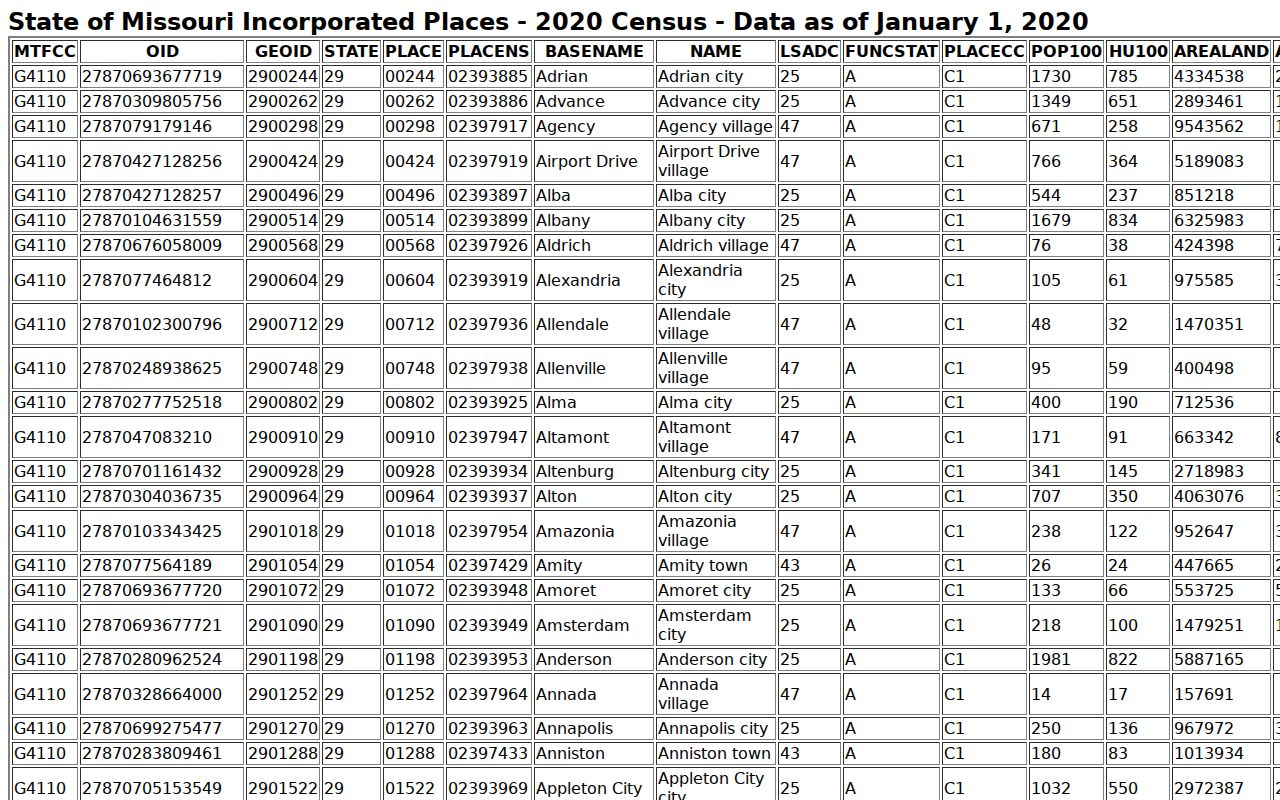
Some context on the city itself. Campbell counted 1,605 residents in the 2020 Census, ranking third among Dunklin County's incorporated places in that table. That figure describes city population only. It says nothing about court volume, payment activity, or court availability. Treat it as local color for a docket search, nothing more. The 2020 Census incorporated-places table supplies that population context.
Older records add flavor but need care. The official FY2013 municipal report lists Campbell with 51 outstanding and 46 issued warrants in its historical row. Those FY2013 figures are not current counts. They are not a list of people. They cannot tell you anyone's present Campbell warrant status.
History is useful only with its date attached. Use the 1999 structure source and the FY2013 row to understand past municipal context, then return to the current Campbell ticket, Case.net, and Circuit Clerk for any real case or court-date question. That separation keeps historical Campbell data from masquerading as a current Campbell court record.